This is the fourth episode to come out of our partnership with the JUSTNature project, an EU-funded initiative promoting greener, fairer, low-carbon cities via implementation of Nature-based Solutions. Alice Reil and Linda Schrapp talk about the temporary solutions that have been tried in two separate semi-public courtyards in Munich, Germany. They explain how co-creative processes have reinvented the spaces in an attempt to meet the diverse needs of groups usually on the periphery of planning, including children, migrants, and low-income families.
Participation in the JustNature project has enabled the City of Munich, Germany, to collaborate with a handful of local actors to redesign and test temporary Nature-based Solutions for inner city courtyards.
The primary objective is to address the effects of climate change. Before joining JustNature, modelling by the city administration showed an increase in the Bavarian city’s average temperatures and that there was very little cooling even in winter.
Green initiatives were seen to make a small, localised difference, but were too limited in scale to have a significant impact. Through JustNature, Munich piloted ideas that transform inner city courtyards into green patches that mitigate urban heat islands, and give more people access to green spaces for reasons of leisure, learning, and improved health.
Credits: N. Martin-Beaumont
Why Courtyards?
Coordination of the project is led by Alice Reil and Linda Schrapp. Both work in the green and open space planning unit of the City of Munich, which falls under the Department for Urban Planning and Building Regulations.
Munich is a dense city, and open space is limited. Alice and Linda say that inner city courtyards were always an overlooked and therefore underutilised resource, and that greenery can be added with very little disruption, providing the kind of benefits that enhance urban resilience, including:
- Improved air quality
- Enhanced biodiversity
- Heat mitigation
- Stormwater management
- Places for recreation that foster community interactions
Testing was conducted on one public and one-semi courtyard, over which the city has some authority, and which provided a visible reference for citizens and stakeholders for the potential. It is hoped that the lessons Munich from this project will also be applied to privately owned ones.
St. Anna’s Courtyard
Site one is situated in the city centre, on land shared by St. Anna Primary School and the St. Anna Secondary School, equalling more than 1,000 pupils between the ages of six and 19.
It actually comprises two courtyards: before the project, the larger one was home to just a handful of fully-grown trees, a smattering of shrubs, a school garden, a sports court, and play equipment for the kids. There was very little seating, though. The smaller patch was a designated quiet space. As Alice explains, “it was completely asphalted… and it only had some sort of cement seating furniture which no one used”.
The department for education had already earmarked the school for a redesign, but JustNature gave the city a chance to try a bold new approach. Together with some of the school children, they designed changes that would be in place for 1.5 to 2 years, during which they would assess which elements were suitable for long-term implementation. The early consultation process revealed spots where the youngsters felt uncomfortable, and there were differences in how the space and facilities were used split along lines of age and gender.
A landscape designer married their input with legal requirements (e.g. fire safety regulations and protections for the built heritage) to propose a concept, which was one of the major challenges. Alice explains that it was made harder yet because “we needed quite a few departments to agree” on the final design, which was difficult given they were pairing all this with a restrictive budget “in a temporary setting.”
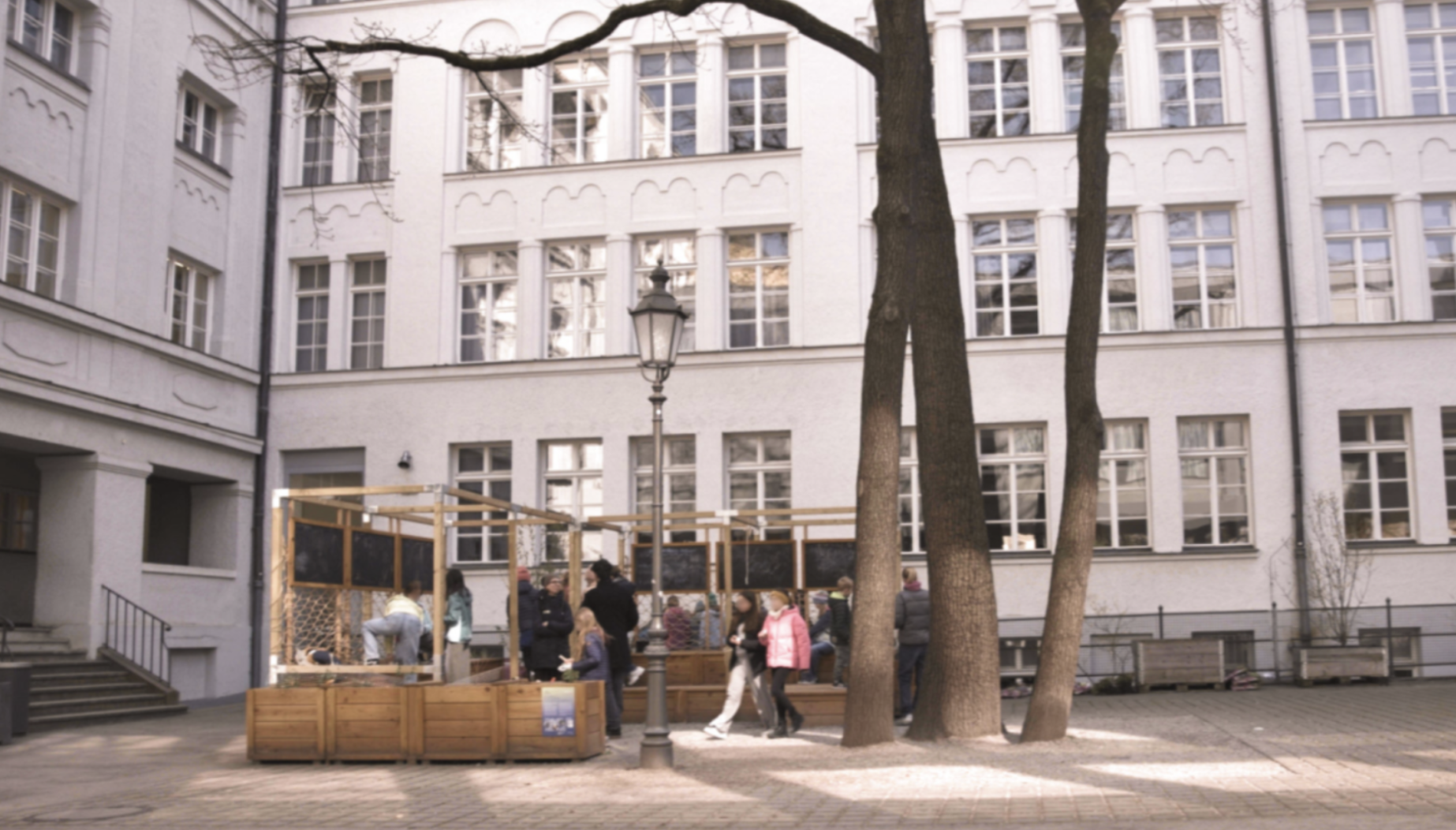
The answer came in the form of mobile shadow islands – raised planters that can be moved around the school yard – which could be filled with plants, used for growing vegetables with the students, and to create “an open air classroom seating area”.
Success was measured by how well the courtyard meets the needs of the “school family” with assessment assisted by student representatives in a series of workshops.
Bellevue di Monaco Courtyard
The second location catered for a completely different target group, and required another approach.
At around 150 m2, this relatively small courtyard is owned by the City of Munich but managed by the nonprofit on the site, the Bellevue di Monaco Residential and Cultural Centre. This social institution provides various services, courses, and housing for a rich diversity of users, providing “a very good opportunity to network with each other,” Linda says.
After a co-creative workshop involving planners from the city administration and researchers from the local project partner, Technical University of Munich, the site was selected as one where nature-based interventions could create a welcoming community space that supports wellbeing and social cohesion. It was also a chance to open up the courtyard which had always been available to visitors of the “very famous cafe” on site, but now could be accessed by the general public without obligation to spend.
“For us, it was important to provide this [consumption]-free place for the people” for the benefit of low-income families, Linda explains.
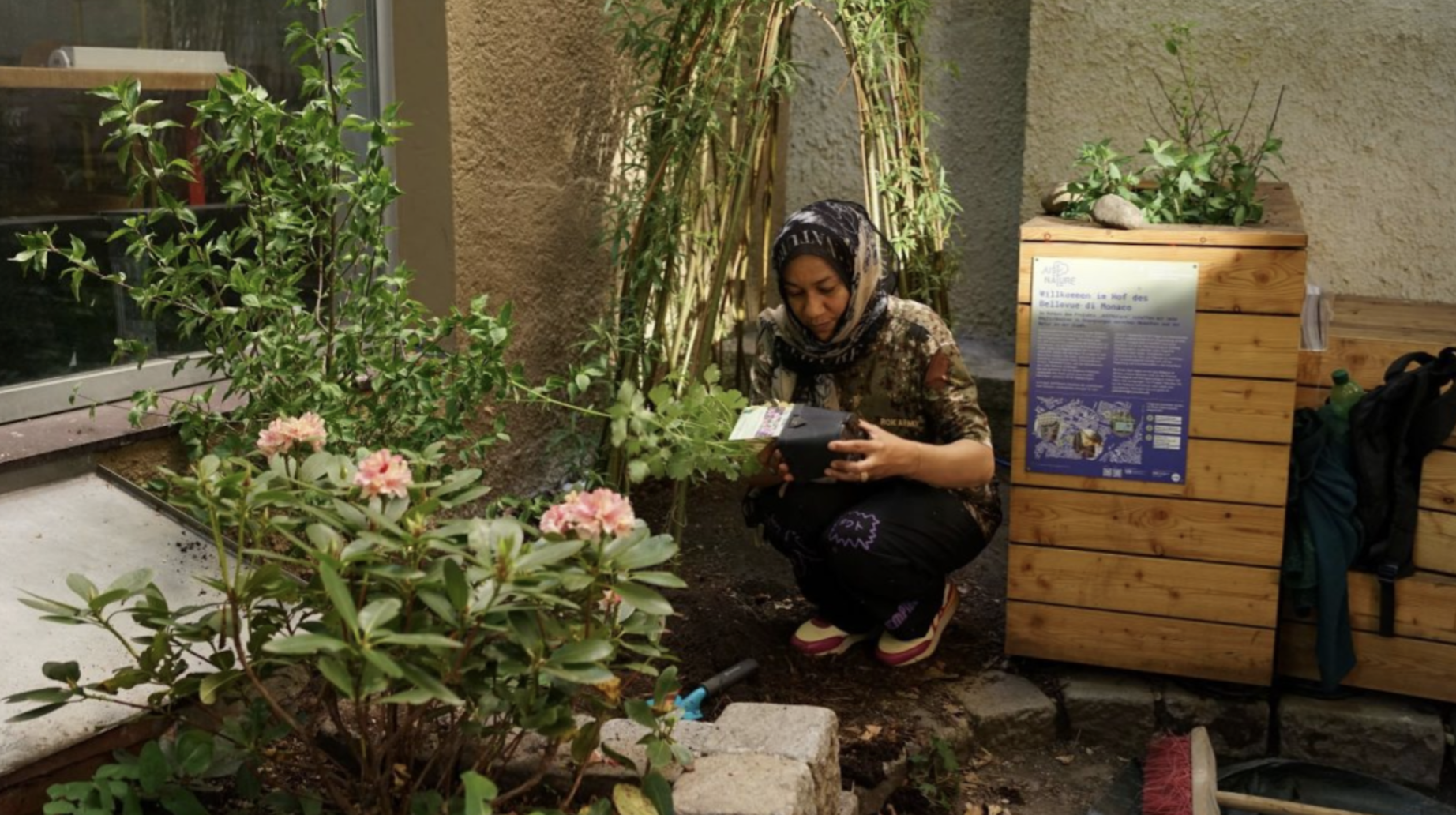
Just as with the school, a co-creative workshop was held for the Bellevue residents and other service users to suggest ideas. “They had wishes like more nature, more green… some decoration elements.” They made lamps in guided workshops. One child requested a treehouse where people could escape to when they want to be alone, while others suggested functional options like a cinema screen and play activities.
The new features were officially opened in August 2024, with a better than expected 300 people attending throughout the day, Linda admits. “It was just so nice to see all the smiling faces and all the happy people that we really had through these playing activities.”
Learning & Advice from Two Different Blueprints
The city worked with a local network of partners to make these changes happen.
Spiellandschaft Stadt e.V. provided their expertise to engage young people in the planning processes, especially in the school and Green City e.V. supported the project with their experience in urban greening and climate protection measures. WOW! Urbane Utopien built the public furniture used on both sites, while FreiraumViertel provided the customised seating areas and modular, movable plant containers.
The courtyard prototypes differed in the users, needs, and solutions, which is useful for identifying different functions courtyards provide in the city, and how approaches to redesigning such spaces need to be tailored to localised conditions. There are, however, some general lessons, and Alice and Linda are happy to share their advice.
1. Co-creation First
A community needs to be involved in designing any space they are expected to make use of.
Meaningful engagement builds a sense of connection, agency, and ownership with a space, as well as being the most effective way to identify user needs. Conditions may change over time, though, which is why ongoing feedback and planning sessions are also important.
Any city embarking on this process needs to understand the investment required, even for temporary solutions, Alice says. “Co-creation takes time.”
It’s also essential to come in without a preconceived idea for the space, and let the participants lead the design.
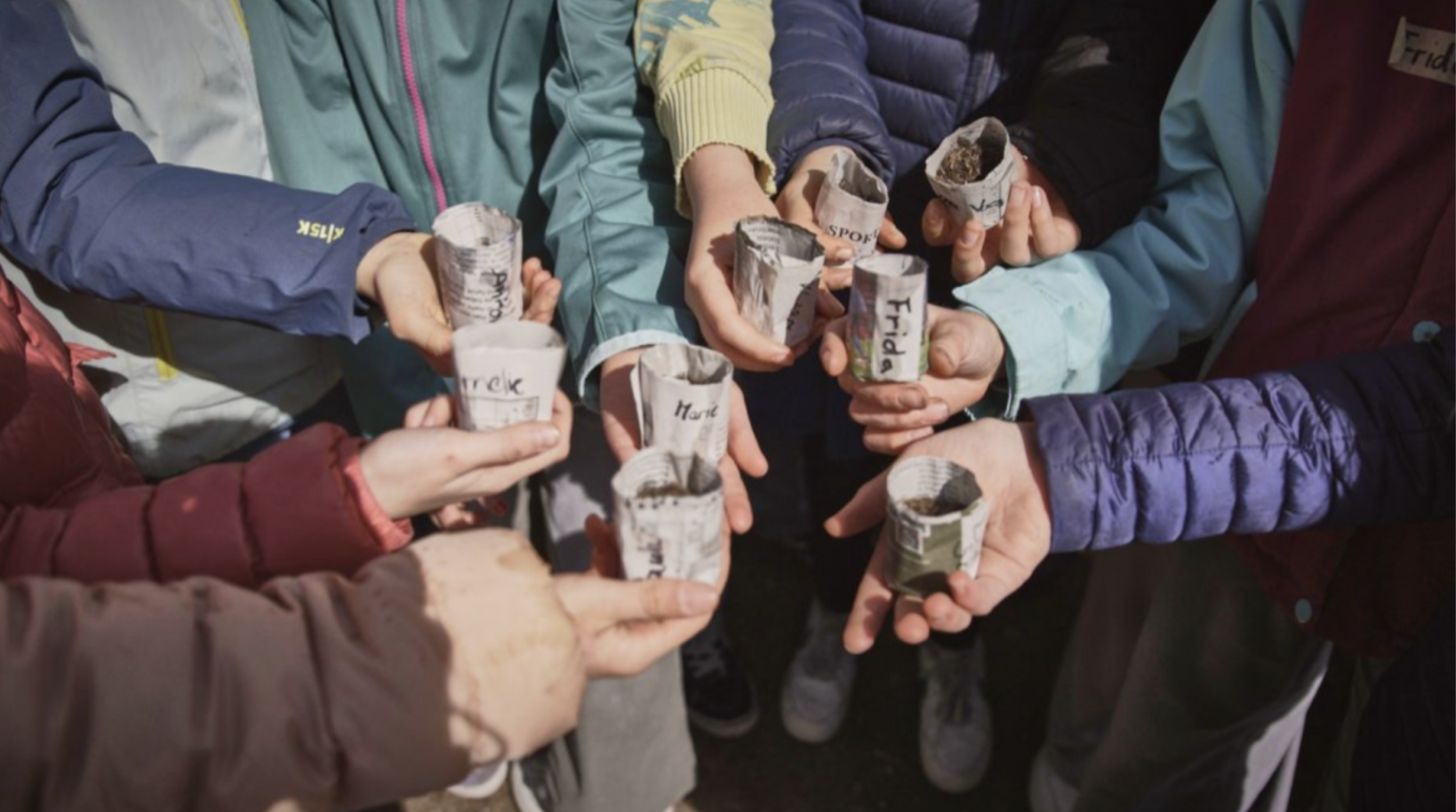
“That’s definitely something that we can’t emphasise enough,” Alice continues. “There really needs to be purposeful co-creation, but it also needs to be co-creation which fits the circumstances and those that are involved.”
2. More Power to Project Participants
Short-term experiments were a new idea for Munich, so the processes were not already in place when the project began, making it much slower, Alice explains. “I think here is where the city still needs to find new ways of doing things… things need to be faster, less bureaucratic.”
Temporary actions were hard to put in place too because of procurement regulations. Rather than subcontract the work next time, they would prefer to bring stakeholders on board as project partners – with an assigned budget – “because I think that allows for more flexibility”.
3. Maintenance
Implementing the plans was only the start. Finding volunteers who would care for the living parts after they were in place was a challenge.
It’s another benefit of early engagement: people get invested.
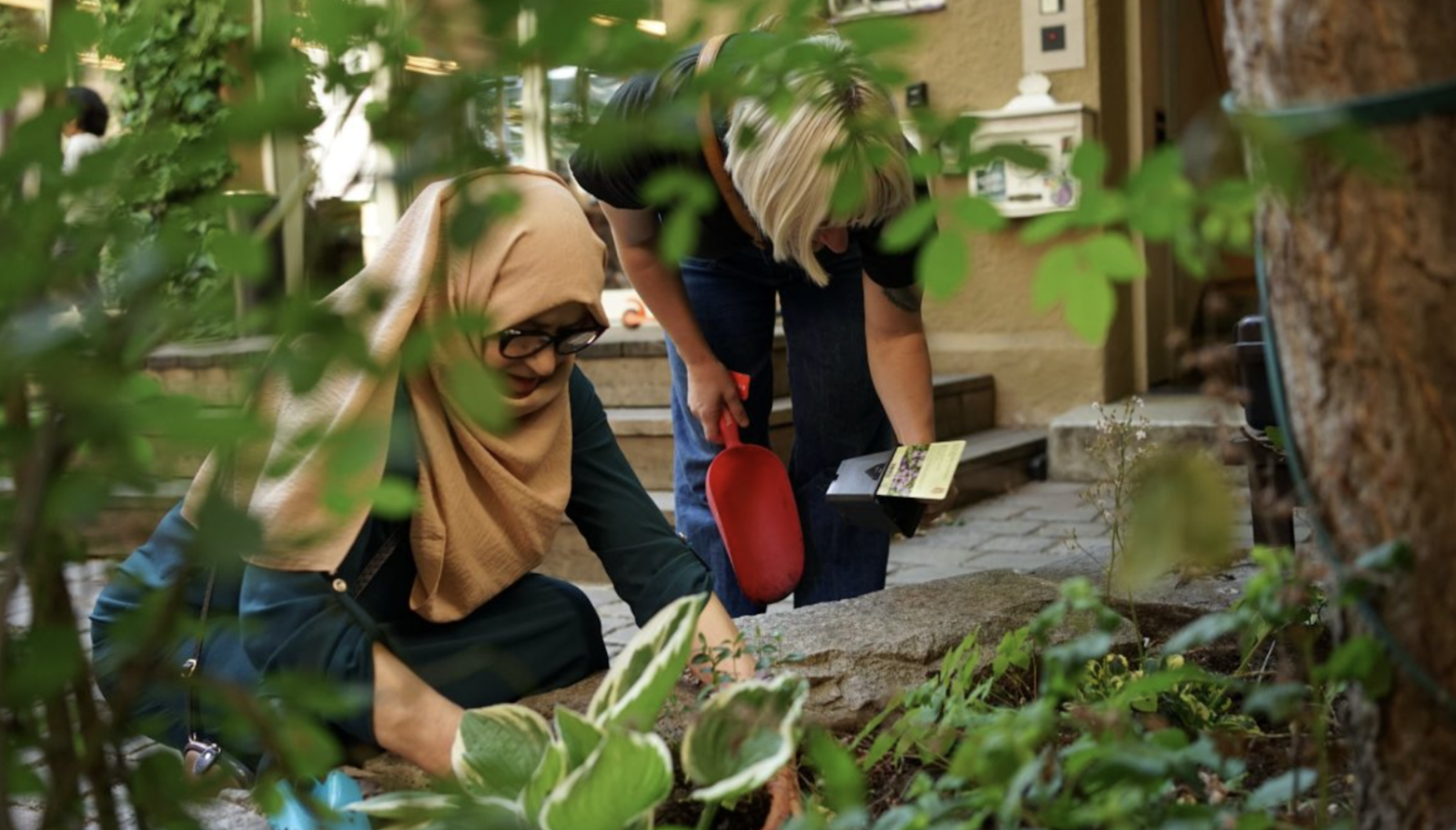
Events held on both sites helped identify willing parties, such as the women who regularly attend coffee mornings at the Bellevue di Monaco Residential and Cultural Centre, and the keen gardeners among the classes at both schools.
4. Language Matters
“Sometimes we get lost in jargon,” Alice warns, often by making the mistake of assuming people are starting with the same knowledge of the “environmental perspective” as us.
“Let’s see how we can really communicate the benefits to colleagues who work in the health department or mobility department” or elsewhere internal or external to the municipality.
Stakeholder groups differ so vastly that we should avoid complex language and abstract notions such as “Nature-based Solutions” or “ecosystem services”, opting instead for words that are tangible for everyday people.
A Rosy Long-term Vision
Those working on the project hope that the public prominence of the cultural centre especially will make these pilots a showcase – and therefore multiplier – for the potential of courtyards in Munich and further afield.
Sure enough, other courtyards in Munich have begun looking to these pilots for inspiration and the school has already decided to keep some of the temporary installations.
In 2025, the city also committed to a climate resilience resolution, raising the prospect of financing Nature-based Solutions in more municipal projects – like Kindergartens and care homes for the elderly – and is developing advisory services to assist.
For more on Munich’s strategic concepts and strategies around open space planning and climate resilience, Alice and Linda recommend the following documents (in German only):
- Expert report “Integration of climate-resilient green and open space structures into Munich’s historic old town”
- Open space concept for the inner city
The JUSTNature project has received funding from the European Union’s Horizon 2020 Research and Innovation Programme under Grant Agreement No. 101003757.
Host and co-writer: Fanny Téoule
Guests: Alice Reil and Linda Schrapp
Audio editor and writer: Karl Dickinson
Music composer: Jenny Nedosekina
Graphic designer: Vivian Monteiro Malta & Julia Micklewright
Listen to the previous episode of the series
In this episode , we travel to Szombathely, where a neglected schoolyard and an overlooked riverside plot were transformed into green spaces. JUST Nature...