This fifth episode of our JUSTNature series takes us to Chania, on the island of Crete, where we meet Petroula Sofia Anastasiadou, the representative of Chania. Together, we explore the Jasmine Wall , a vertical green installation built on the Kydon municipal parking structure in the heart of the city. More than just a green façade, the project combines environmental monitoring, citizen participation, and local identity to rethink how nature can re-enter dense urban spaces.
A City Under Pressure
Chania is known for its beauty, a coastal Mediterranean city with a rich history. But behind this image lies a familiar urban reality.
The city centre is dense, heavily dominated by cars, and lacks accessible green spaces. During the tourist season, the population can surge dramatically, intensifying pressure on already limited urban infrastructure. Rising temperatures and increasing heatwaves only make things more challenging.
Nature, quite simply, is missing where it is needed most.
From Parking structure to living wall
The Jasmine Wall emerged as a response to this gap.
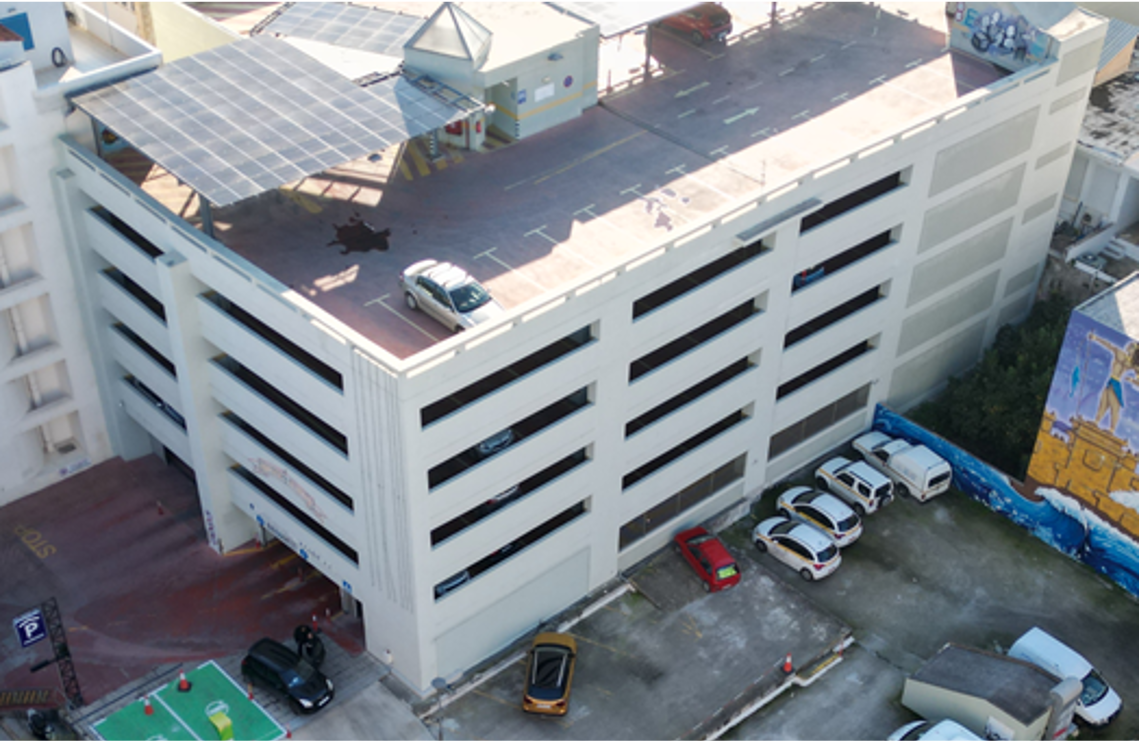
Located on a five-storey municipal parking building operated by KYDON SA, the site sits in one of the busiest and most exposed parts of the city. It was chosen precisely because of its visibility, density, and lack of greenery.
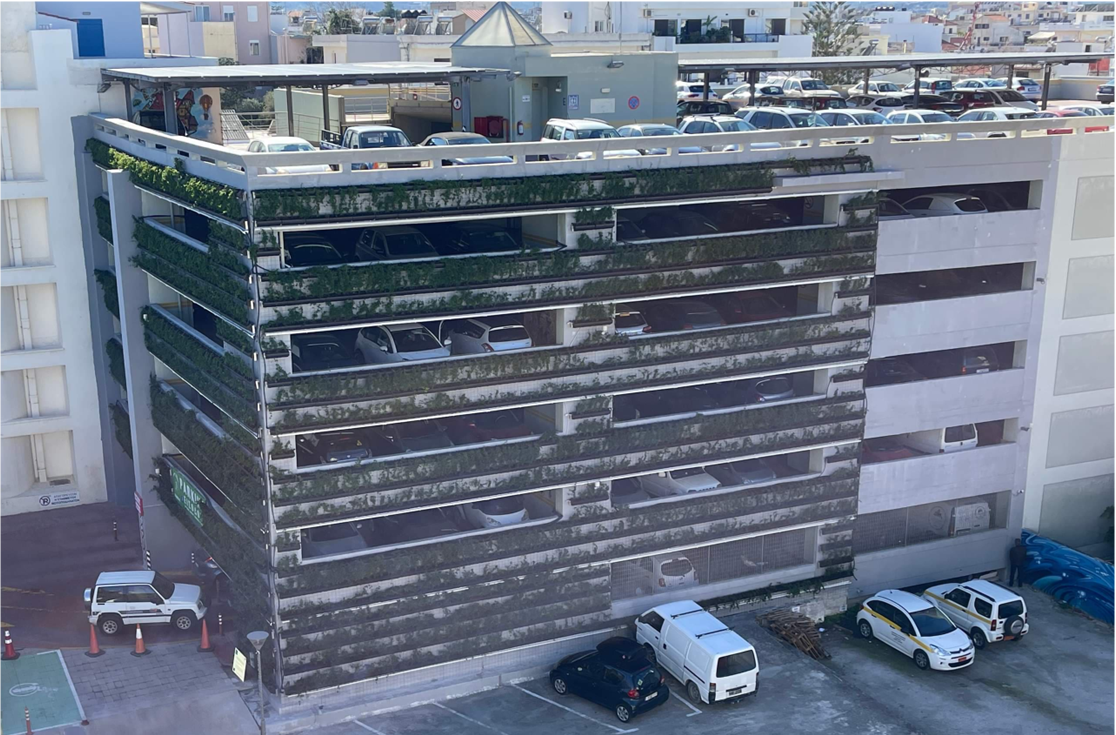
What was once a bare concrete façade is now a vertical garden designed to:
Improve air quality
Reduce local temperatures
Bring nature into everyday urban life
Enhance the aesthetic quality of the street
But beyond its physical transformation, the project represents something deeper: a first step into nature-based solutions for the city.
Before | Credit: JUSTNature
After | Credit: JUSTNature
Choosing Jasmine: A collective decision
One of the most distinctive aspects of the project is how it was shaped.
Through workshops and consultations, citizens were involved in key decisions. They chose:
The type of intervention (green wall vs. green roof)
The scale of the installation
And even the plant species
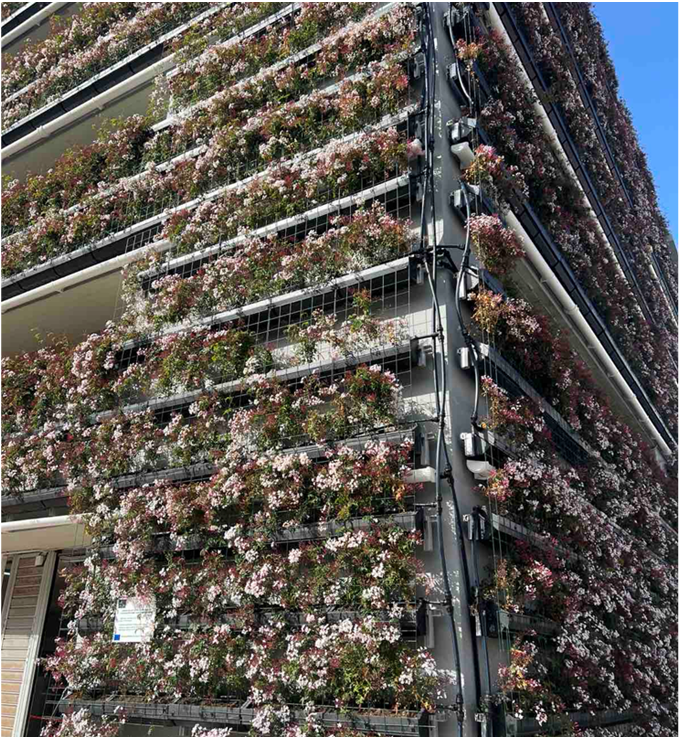
The final choice jasmine was not accidental. A historic symbol of the city, jasmine connects the intervention to Chania’s identity and memory. It’s also well adapted to the local climate, making it both meaningful and practical.
Credit: JUSTNature
Making the invisible visible
To understand the impact of the wall, the project integrates a strong monitoring component.
More than 20 sensors track:
Temperature and humidity (indoor and outdoor)
Air pollutants and particulate matter
Solar radiation and wind conditions
This data is stored and made accessible to the public, helping translate environmental change into something tangible.
Participation as a Catalyst
Chania had little prior experience with nature-based solutions. There were no local experts, limited technical knowledge, and complex coordination between public and semi-private actors. Everything had to be learned along the way, from design to procurement to construction. And yet, this challenge became one of the project’s greatest strengths.
As Petroula explains, the city now has something it didn’t have before: “knowledge, experience, and confidence to move forward”.
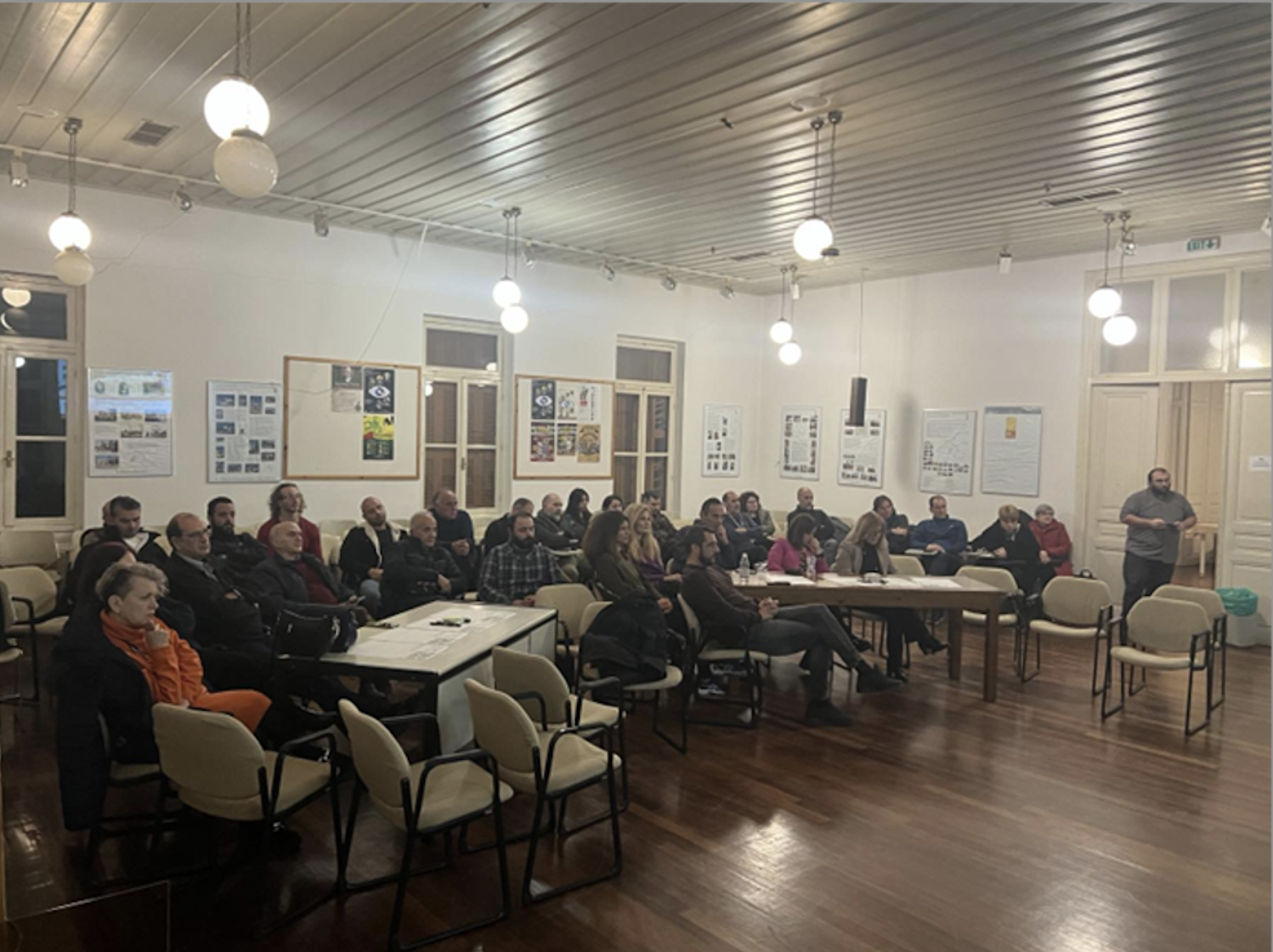
A key lesson from Chania is the power of participation. Workshops, public events, and educational activities played a central role, especially in building long-term engagement.
Children planted jasmine themselves. Local actors contributed ideas. Gardeners and companies became involved in maintenance.
Credit: JUSTNature
This created something essential: a community around the project. And in doing so, it also helped address one of the most overlooked challenges of urban greening: who takes care of it afterwards.
Beyond one wall
The impact of the Jasmine Wall goes beyond its physical footprint. It has already inspired new initiatives in the city, including the redevelopment of a Mediterranean park using similar participatory approaches.
More broadly, it has introduced new ways of working:
Involving citizens early
Experimenting with solutions
Building knowledge step by step
In other words, it has opened a door.
Chania’s experience reminds us that you don’t need a large park to start bringing nature back and that participation can shape better, more accepted solutions. And sometimes, the biggest impact is not the project itself, but what it enables next
The JUSTNature project has received funding from the European Union’s Horizon 2020 Research and Innovation Programme under Grant Agreement No. 101003757.
Inner city courtyards represent untapped potential for urban green space. In this fourth podcast episode from What’s That Green?’s special podcast series...