
“We really need to see how biodiversity thrives because without biodiversity there’s no clean water, there’s no fresh air… we’re not planting more trees for the sake of it, we’re doing it to make our lives healthier.” Loredana Scuto
When we think about greener cities, our minds often jump to parks, street trees or flower beds. But how do cities actually know whether nature is thriving? And how can local governments decide where to invest, what to protect, or which neighbourhood needs attention first?
These were some of the questions we explored with Loredana Scuto, Urban Programme Officer at the International Union for Conservation of Nature (IUCN), during our special Urban Future 2026 podcast series recorded after the conference in Ljubljana. Working across Europe, Latin America and Asia, Loredana helps cities integrate biodiversity into urban planning, through inspiring ideas, and practical, science-based tools.
Cities are becoming the front line of nature conservation
For many years, biodiversity conservation was associated with national parks and protected landscapes, while cities were often considered the opposite of nature.
That perspective is changing.
Today, most of the world’s population lives in cities, making them the place where many people experience nature every day. As Loredana explains, this is exactly why urban areas have become essential to biodiversity conservation.
“The majority of us live in cities and therefore, for most of us, the first interaction we have with nature is in our cities.”
Rather than treating cities as ecological problems, IUCN now sees them as part of the solution.
Measuring nature instead of guessing
One of the most fascinating parts of our conversation was discovering the IUCN Urban Nature Indexes.
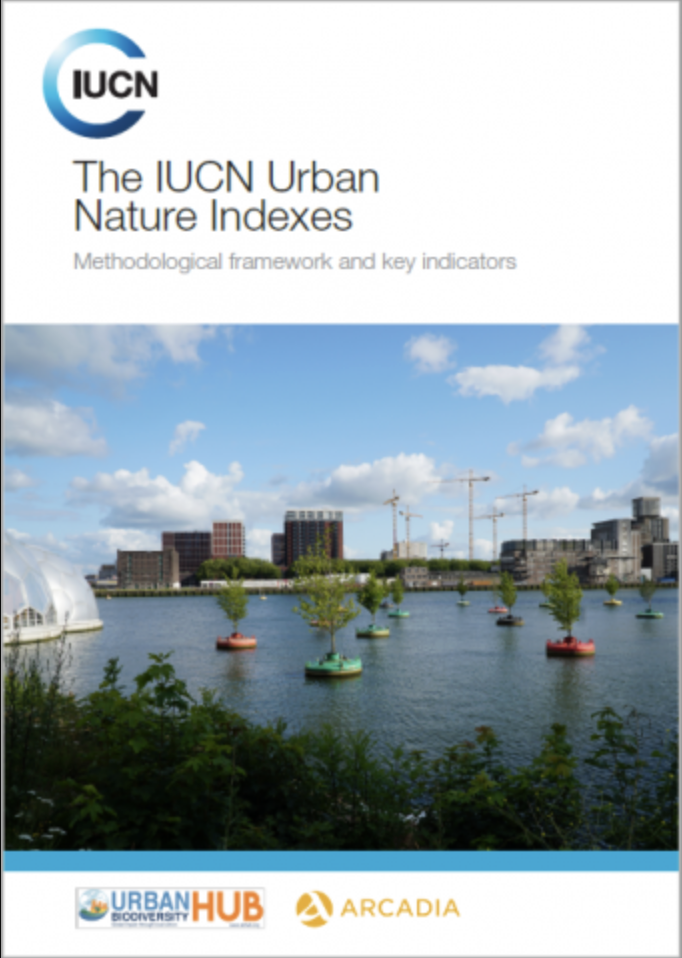
Instead of offering cities another checklist, the Urban Nature Indexes provide a flexible framework that helps municipalities evaluate their relationship with nature. The methodology includes 30 indicators covering biodiversity, ecosystem management and the benefits that nature provides to residents. What makes the approach particularly interesting is its flexibility.
Cities don’t need to complete every indicator. Depending on their size, available data and local priorities, they can choose the indicators that make the most sense for their context and repeat the assessment every few years to track progress.
The goal isn’t to rank cities against one another. It’s to help each city understand where it stands today, and where it could improve tomorrow.
Science, but adapted to local realities
One message came back throughout the conversation: there is no universal recipe for urban nature. A solution that works in one city may be completely inappropriate somewhere else.
“A tree doesn’t work everywhere.“
It might sound surprising, but in some climates planting more trees is not necessarily the best ecological choice. Water availability, local ecosystems, existing biodiversity and climate conditions all matter.
Instead of copying what another city has done successfully, Loredana encourages municipalities to work closely with local scientists, universities and ecological experts to understand what nature really needs in their own context.
Sometimes that means protecting wetlands. Sometimes restoring grasslands. Sometimes creating blue spaces rather than green ones. Nature-based solutions begin with understanding place.
Nature is ultimately about people
One of the strongest ideas from the episode is that biodiversity should never be considered separately from human well-being. Protecting urban nature isn’t simply an environmental objective. It’s also about healthier neighbourhoods, cleaner air, cooler streets and better quality of life.
As Loredana puts it:
“We’re not doing it for the sake of planting more trees. We’re really doing it to make our lives healthier and increase our health and well-being in cities.”
This shift, from seeing nature as decoration to recognising it as essential urban infrastructure, may be one of the biggest changes happening in cities today.
Collaboration makes better cities
Throughout the conversation, another idea kept resurfacing: cities cannot do this alone.
Municipalities, researchers, citizens and international organisations all have different pieces of the puzzle.
Through initiatives such as the Urban Nature Indexes, IUCN Urban Alliance and its global network of experts, the organisation aims to create spaces where knowledge can circulate across countries and disciplines.
As Loredana reminds us, one of the greatest strengths of her work is simply bringing people together.
“The power of our work is the human interaction.”
Looking ahead
Urban biodiversity is no longer just about creating more green spaces. It’s more about making informed decisions, understanding local ecosystems and ensuring that nature becomes an integral part of how cities grow and evolve.
The encouraging news is that more and more cities are embracing this change. As awareness grows, biodiversity is increasingly becoming part of political agendas, planning processes and everyday conversations. The challenge now is turning this momentum into long-term action.
This episode is part of our Urban Future Series, recorded in connection with the Urban Future Conference 2026 in Ljubljana, where we meet the people shaping greener, more resilient and more livable cities.

Host and writer: Fanny Téoule
Guest: Loredana Scuto
Audio editor: Karl Dickinson
Music composer: Jenny Nedosekina
Graphic designer: Julia Micklewright
Listen to the previous episode
In this episode of What’s That Green?, we sit down with Waldemar Olbryk, CEO of Archicom, to explore how the Fuzja project in Łódź is transforming a former...