
When we think about Nature-based solutions, we often imagine large parks or ambitious urban regeneration projects. But what if meaningful change could begin with just one street?
In the final episode of our JUSTNature series, we travelled to Gżira, Malta, where Shirley Attard, Project Manager for the JUSTNature pilot, shared how one of the country’s most densely built municipalities is slowly transforming grey infrastructure into greener, healthier public space.
Rather than focusing on grand interventions, Gżira’s story reminds us that lasting urban change often starts with small, carefully planned actions, and with people willing to learn together
A city where every square metre counts
Located on Malta’s coastline, Gżira is a compact and highly urbanised municipality. Heavy traffic, very limited green space, poor air quality and intense summer heat make it an ideal place to rethink how nature can become part of everyday urban life.
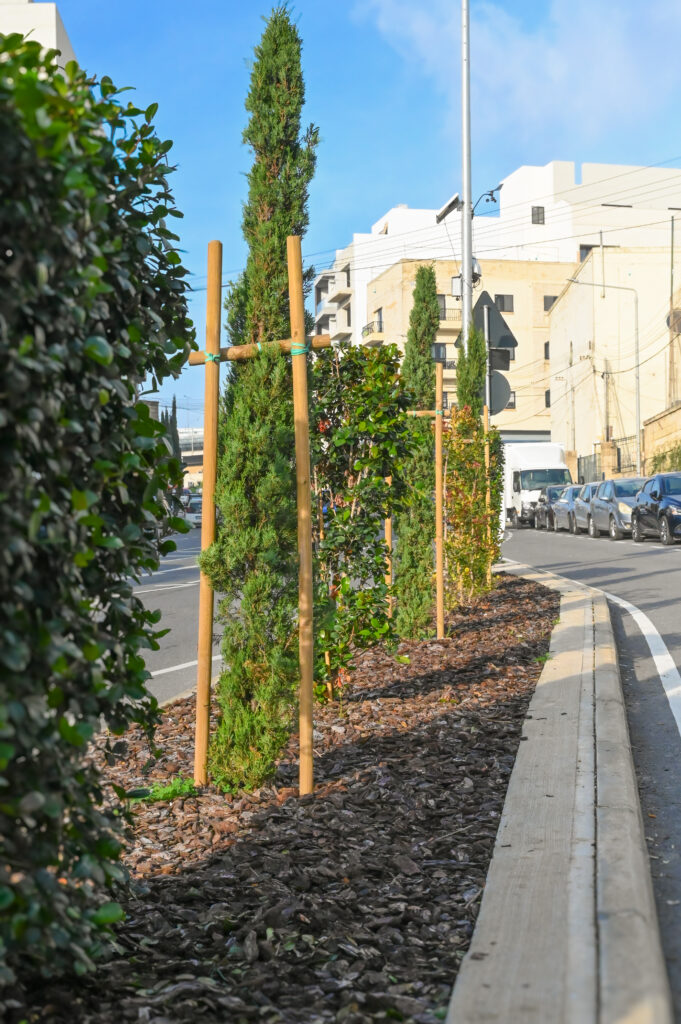
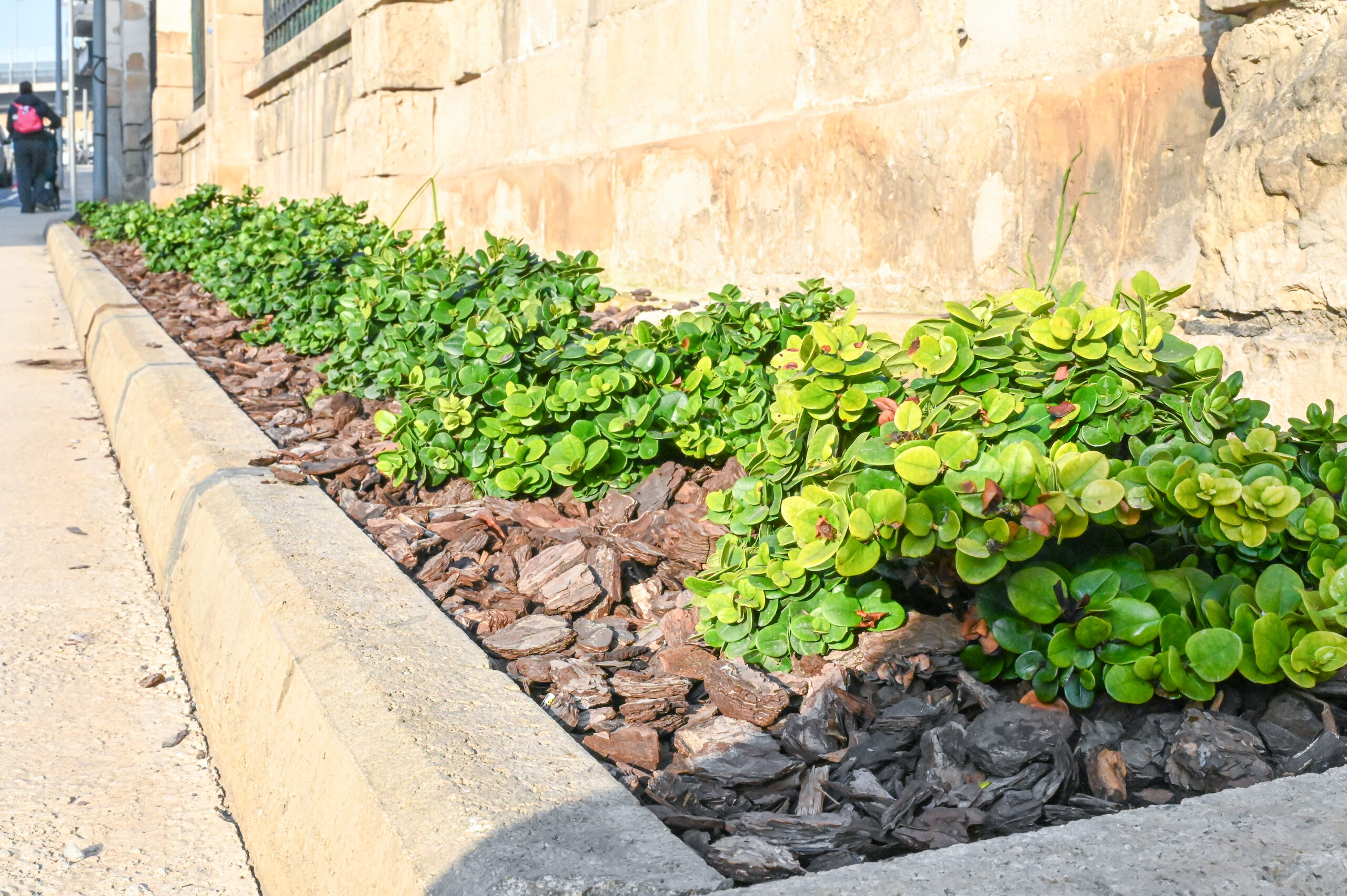
For the JUSTNature pilot, the team focused on Sliema Road, one of the city’s busiest streets. Once dominated by concrete and cars, the vision was simple: make the street greener, cooler and more pleasant for the people who use it every day.
To achieve this, two complementary interventions were introduced:
- planting new street trees within newly created planting areas,
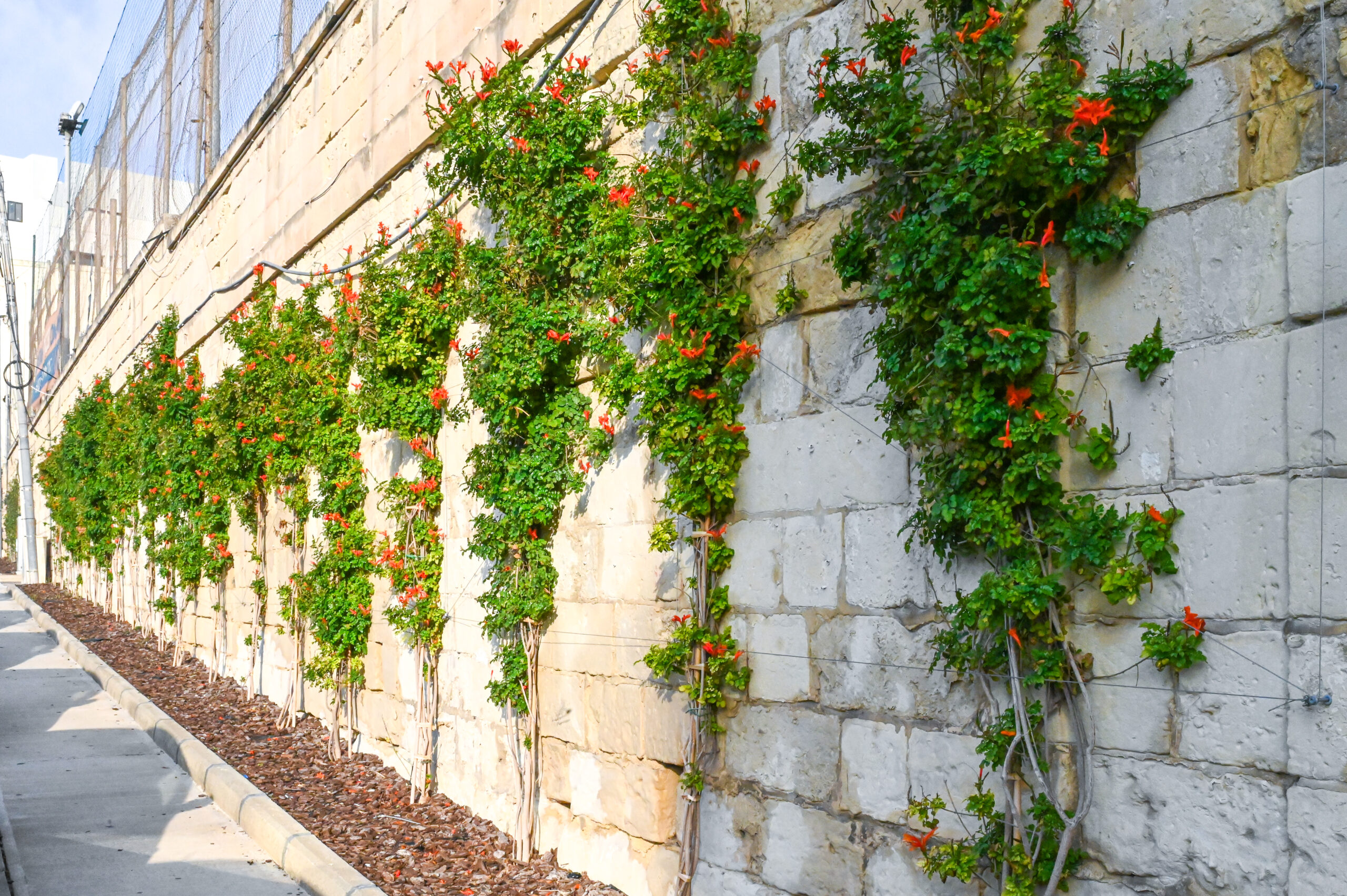
- installing a climbing green wall along the boundary of the local primary school.
Individually, these are modest changes. Together, they begin to reshape how people experience the street.
Co-creation and trust-building
One of the most interesting aspects of Gżira’s experience is that co-creation was new to the local council itself. Instead of designing everything internally, the team gradually opened the process to residents, government agencies, schools and local organisations.
Stakeholders were involved from the very beginning to discuss where interventions should happen, but also to choose plant species, comment on designs and help shape the overall vision.
For Shirley, this represented a major shift.Rather than presenting finished solutions, the council learned to develop them together with the community. Like many cities, however, this wasn’t straightforward.
One of the biggest obstacles wasn’t technical. It was trust. Many residents were initially sceptical that meaningful change would happen at all. Public meetings often became opportunities to raise unrelated frustrations with the local council, making engagement difficult.
Instead of trying to convince everyone immediately, the team chose another strategy. They started small. They identified residents already interested in greening initiatives, collaborated with local organisations, promoted meetings through neighbourhood networks and slowly expanded participation over time. Rather than expecting instant success, they treated trust as something that grows, much like the trees themselves.
Not every challenge came from working with people. Many emerged behind the scenes. The council had little previous experience procuring Nature-based solutions. Administrative procedures took longer than expected, delaying implementation until the ideal planting season had already passed… Although frustrating at the time, these difficulties became some of the project’s most valuable lessons.
Today, the team approaches new projects differently. They understand the importance of aligning procurement processes with ecological calendars, planning further ahead and anticipating seasonal constraints. Rather than seeing setbacks as failures, they became building blocks for future projects.
Creativity engages people better than technical presentations
One lesson stood out particularly strongly during our conversation. Early stakeholder meetings relied on traditional presentations full of technical information. They simply didn’t work, residents quickly lost interest.
Instead, the team shifted towards much more interactive and visual activities. Maps were spread across tables, sketches and photomontages helped people imagine future possibilities. Participants voted for different plant species using stickers. Conversations became shorter, more informal and easier to follow.
As Shirley explained during the episode:
“We realised very early on that heavy technical presentations weren’t working most of the time with residents. It really needs to be creative and interesting for them to engage.“
Sometimes participation isn’t about providing more information. It’s about creating the right conditions for people to imagine change together.
When schools become partners
The project extended beyond the street itself. Working with Stella Maris College, the team developed an educational programme centred around a tree inventory. Students learned how to identify tree species, measure trunks, estimate tree heights and contribute valuable ecological data for the municipality.
But something unexpected happened. Teachers transformed the activity into mathematics lessons, science projects and outdoor learning experiences. Students carried these conversations home, sharing what they had learned with parents and friends.
In many ways, the children became ambassadors for urban nature. The exercise generated valuable environmental data and also strengthened environmental awareness across the wider community.
Small interventions, long-term change
Looking ahead, Shirley doesn’t see JUSTNature as a one-off project but more as She sees the beginning of a new way of working. The experience has given the municipality practical knowledge, stronger partnerships and greater confidence to continue introducing Nature-based solutions across other parts of Gżira.
Her advice for other cities is refreshingly simple:
- Start small.
- Think long term.
- Involve residents and experts from the beginning.
- Don’t underestimate the role of schools.
- Build relationships before expecting transformation.
Because even modest interventions can have lasting impacts when they are rooted in collaboration.
Throughout the JUSTNature series, we’ve visited cities of different sizes, climates and contexts. Yet Gżira leaves us with perhaps one of the most universal lessons: Nature-based solutions can’t only be about planting trees or installing green infrastructure, they’re about creating new relationships, between institutions and residents, between schools and neighbourhoods, and between people and the places they call home. Sometimes, transforming a city begins with transforming the way we work together.
The JUSTNature project has received funding from the European Union’s Horizon 2020 Research and Innovation Programme under Grant Agreement No. 101003757.
Host and writer: Fanny Téoule
Guests: Shirley Attard
Audio editor: Karl Dickinson
Music composer: Jenny Nedosekina
Graphic designer: Julia Micklewright
Listen to the previous episode

What happens when cities begin treating nature not as decoration, but as essential urban infrastructure? In this episode, we head to South Tyrol in Northern...