NbS in Historical Architecture – A Series Preface.
We often talk about green cities as if they’re a futuristic dream, with vertical forests, sponge cities, and buildings that breathe. But what if this “new” vision is actually a very old one?
In this episode , we travel to Szombathely, where a neglected schoolyard and an overlooked riverside plot were transformed into green spaces. JUST Nature project, the municipality and ABUD co-designed nature-based solutions with the community turning forgotten sites into places people now love and care for.
This piece explores how the built environment can move beyond form and efficiency to center human well-being and ecological connection. It reflects the personal journey of Juan A. Vivas from Argentina to Canada up to his thesis Human | Nature Architecture, and how that shift revealed the emotional consequences of over-sealed buildings.
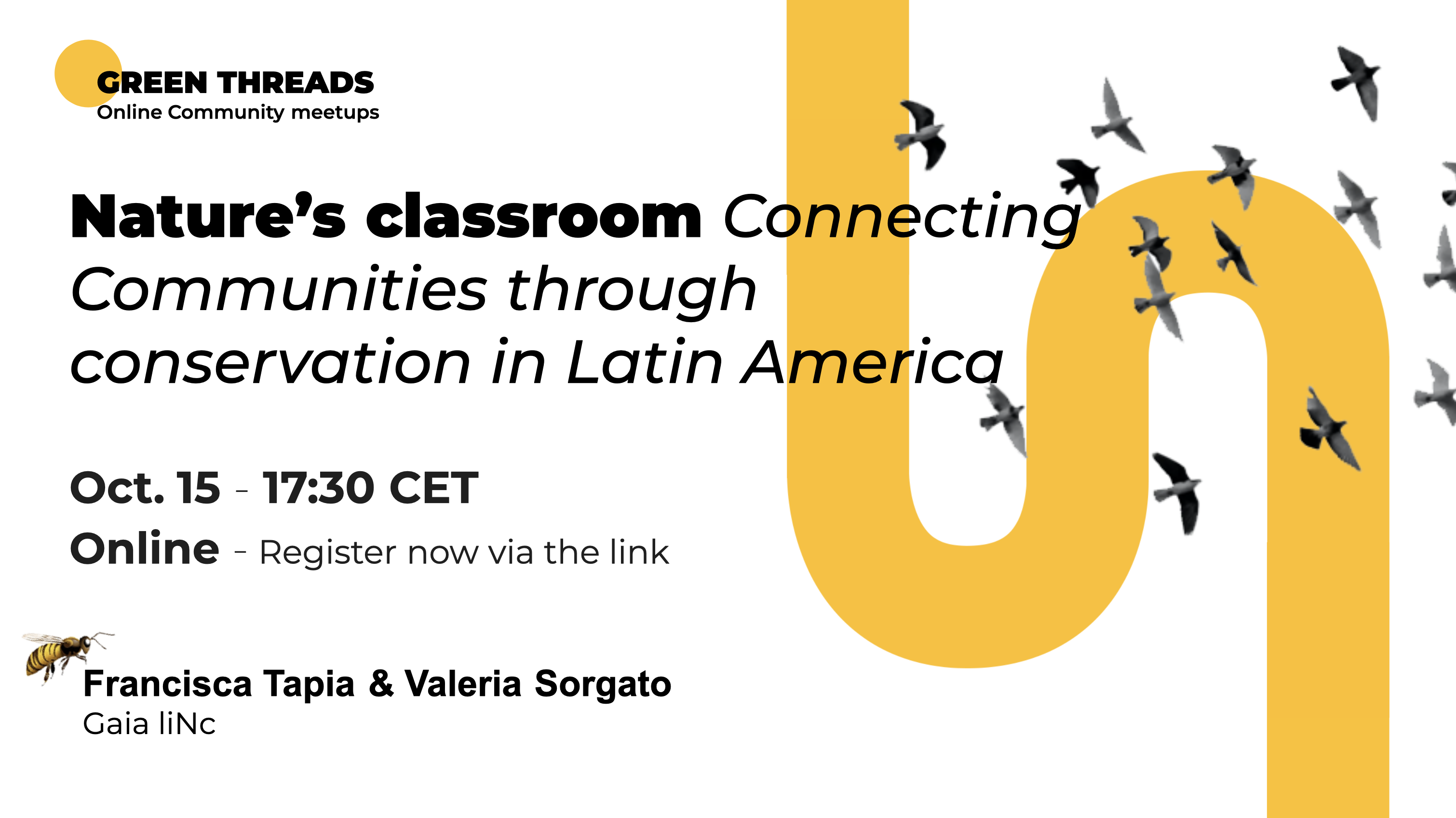
In this session, Valeria Sorgato and Francisca Tapia from Gaia liNc will share how their organization empowers Latin American communities through environmental education and conservation tools. With a strong international network across Latin America, Europe, and beyond, Gaia liNc builds bridges that make local action part of a global movement.
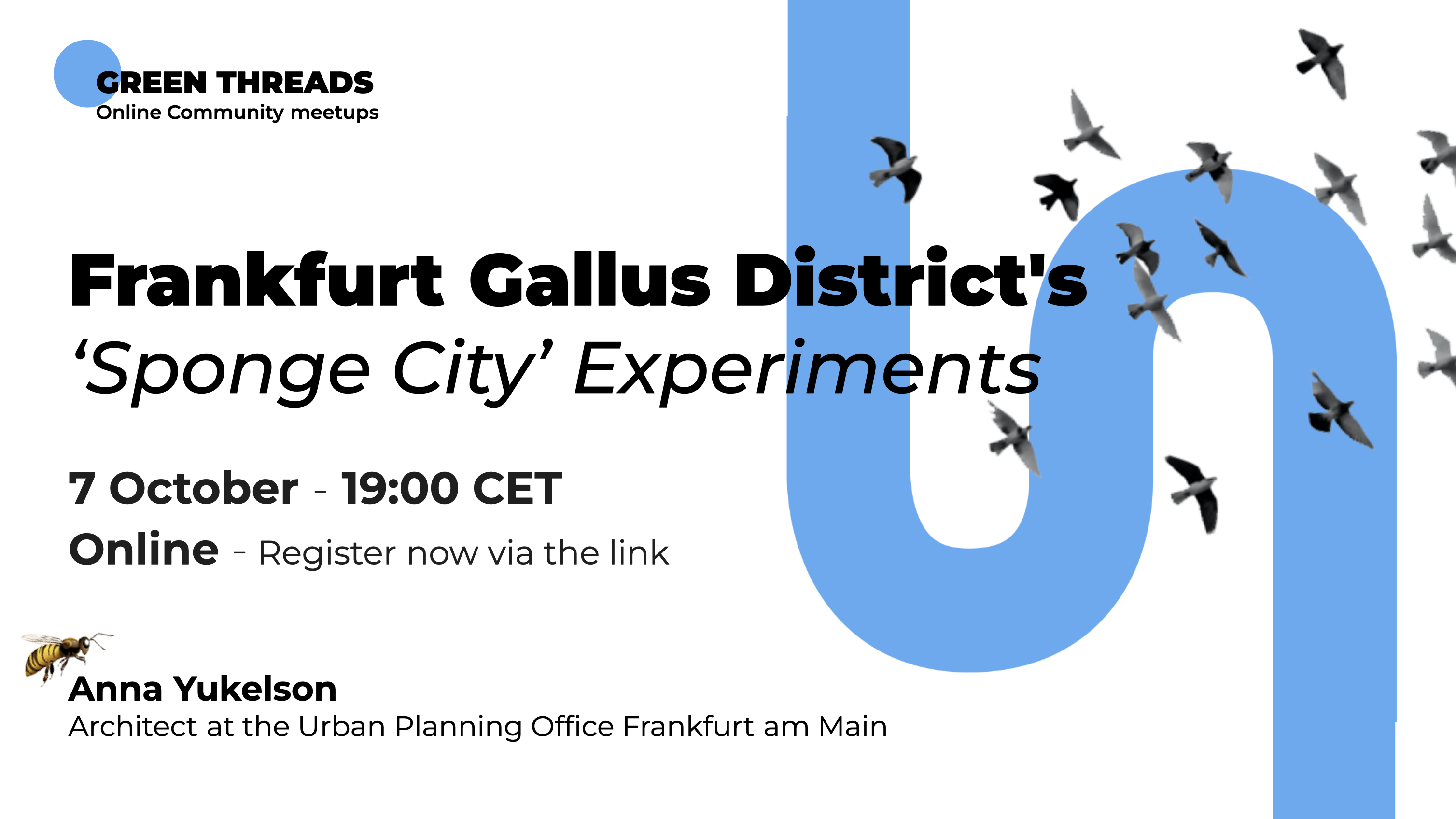
Join Anna Yukelson, architect at the urban planning office of Frankfurt am Main, to discover an innovative Sponge City experiment in the Gallus district. Get a chance to interact and ask all your questions about water sensitive design!
Join us for a GREEN THREAD event – a live online meetup where we’ll open the doors to this growing community and answer all your questions.
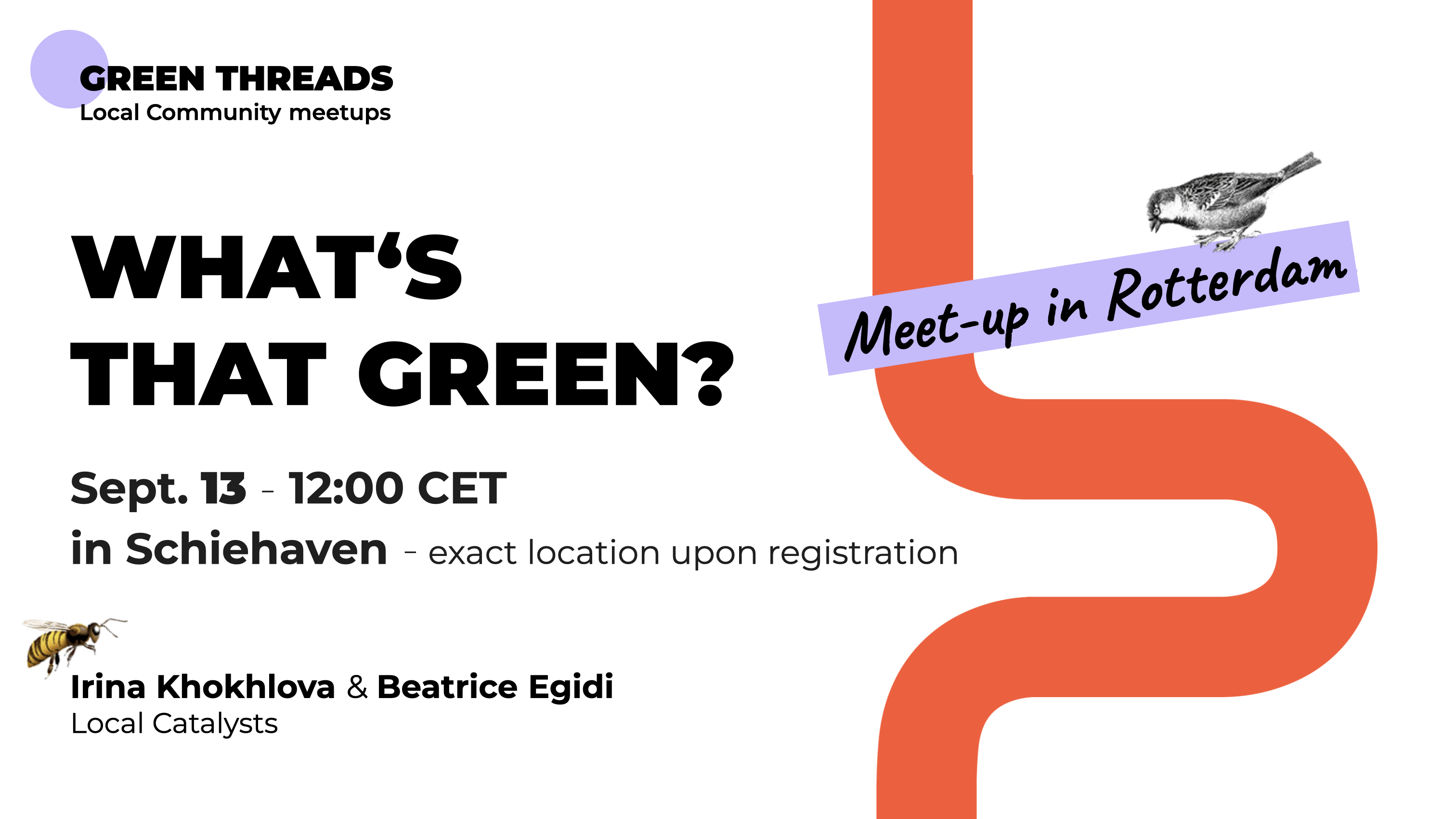
Join Irina Khokhlova and Beatrice Egidi on Sept. 13 2025 to connect with local change-makers and explore ongoing and planned initiatives that are redefining a new relationship between the city and the river in Schiehaven, Rotterdam.
How can a municipality encourage local residents to lead their own community garden project? In this second episode of the What’s That Green? podcast to be recorded LIVE at the Urban Future conference, we speak to Maria Derlõš, an urban gardening project manager at the City of Tallinn, Estonia, about how to develop trust between the city and citizenry, and why non-permanent gardens are a good place to start.
How can a city turn a road designed for vehicles into a climate street? And more to the point, how can urban transformations be introduced in a way that builds trust and enthusiasm? In this second episode of What’s That Green? ‘s collaboration with JUSTNature, Nele Janssen walks us through the co-creation process that Leuven in Belgium tested to green a totally grey street and make it the city’s inspiration for social and environmentally just urban design.
Communities can drive nature-based solutions by starting with their strengths,instead of their problems. Explore how to leverage the ABCD approach for local resilience and green change.